
Community is a Verb
Let's Get Moving
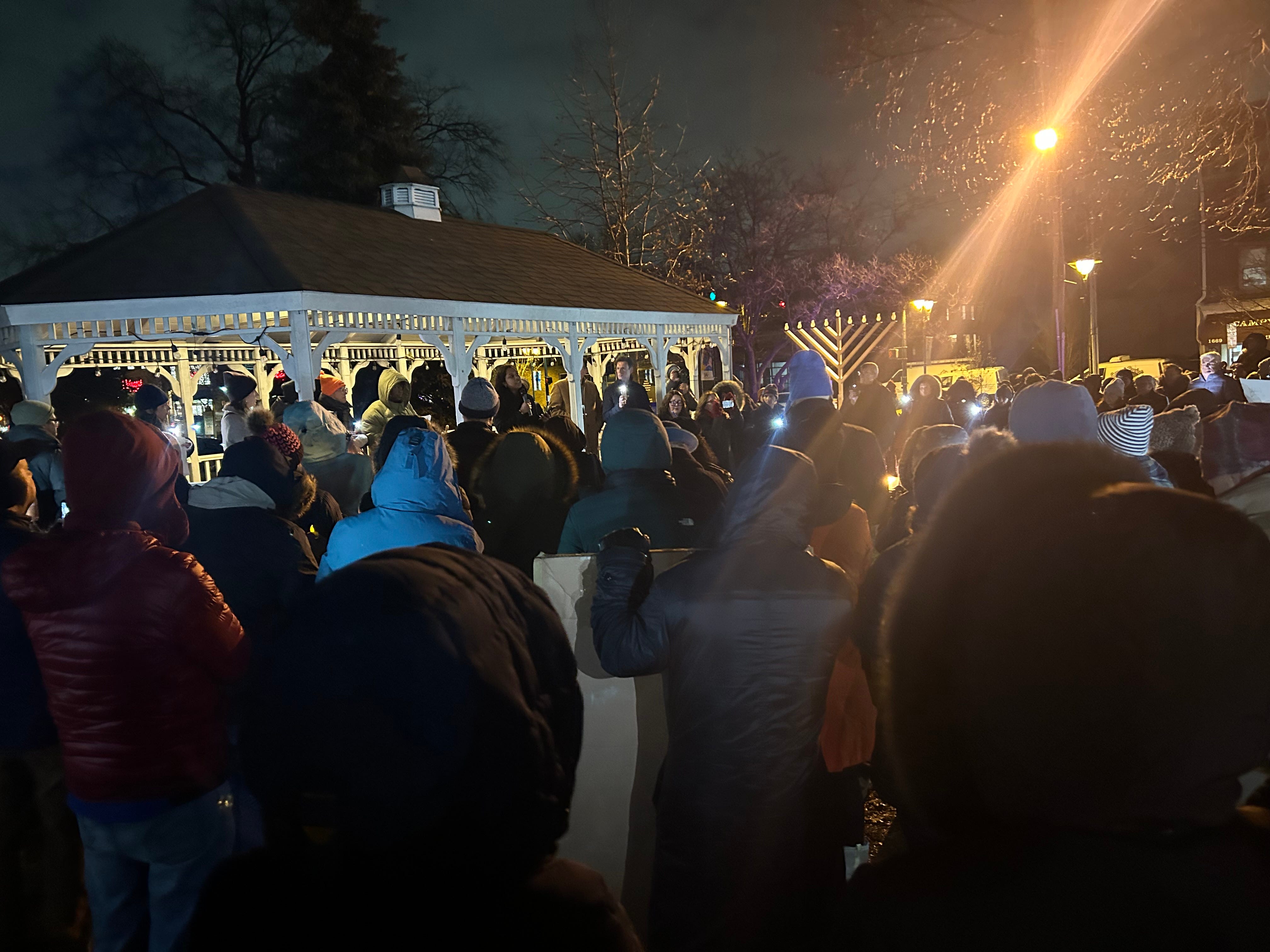
I attended a powerful and meaningful vigil for Renee Good this past weekend in my local community in Maplewood NJ. Leadership spoke about how we can make a difference as individuals and as a community. One of the speakers said “community is a verb” and that resonated with me. I am watching people step up around the world:
Thousands standing up for Renee Good who was murdered in Minnesota by an ICE officer
Fundraisers for the Mississippi synagogue that was destroyed in an arson attack
The brave women of Iran revealing their faces at the threat of death in the hopes of freedom
The “Walk for Peace: 2,300 Miles of hope” where Buddhist monks are walking for peace across the US.
These large scale acts of community are inspiring.
I have benefited from community on a smaller scale as well. When my kids were little, I relied on my community every day. I was in playgroups where we supported each other during playgroup and beyond. My kids felt safe in many neighborhood homes as we took turns watching each others’ children so each mom could find some peace. I feel so lucky that I could drop my kids off at various friends houses. The kids would play and I would do what I needed to do—whether it was to go to a doctor’s appointment, food shop or just have a couple hours to myself at home or at a coffee shop. My community gave my kids the gift of a happier mother and provided them the comfort of knowing how many people they could trust and rely upon beyond their immediate family.
My community continues to support me. During Covid we walked to our neighbors houses to gather outside and process the craziness of those days. Now, I get together with community to write postcards for elections around the country, attend rallies and protests, and to support vulnerable people. We also support each other when we are battling illness or grieving a loss of a loved one.
Last week I bit the bullet and became a volunteer for Lasagna Love. Lasagna Love’s mission is “to feed families, spread kindness, and strengthen communities. Through our neighbor-to-neighbor movement, we connect volunteer lasagna chefs who want to help with individuals and families in need, providing home-cooked lasagnas made with love.” I have been cooking a bunch over the past few years and thought it would be a perfect combo of loving to cook and supporting my larger community. I have signed up to deliver a home cooked lasagna that I make to a family I am matched with throughout the year. A friend of mine has made 300 deliveries (!) quietly without fanfare for the past few years. She is my inspiration for doing this. Here is a video of me practicing making lasagna so I am ready to go when I get my first match. I used this recipe from Smitten Kitchen. (If you can’t see the video for some reason, you can email me and I will send it to you. I am having some technical difficulties….😬)
Wish me luck!
How can you serve your community?
-Think of a community you care about
-What are your skills or interests?
-What is your availability? How can you make time?
-Do you want to do something one time or on an ongoing basis?
-Who inspires you?
Please share in the comments below any plans you have to support your community in 2026. Your contribution may inspire others.
Scroll Down To Read:
12 Gatherings in 2025 I can’t stop thinking about
The Risk of Caring
I Don’t Want a Job
Scroll Down to find out What I Am Reading Now
PS: If you enjoyed this post, feel free to click the ❤️ button. It makes my day and also helps spread the word about my newsletter.
12 Gatherings in 2025 I can’t stop thinking about
I cannot get enough of Priya Parker who wrote The Art of Gathering. Her writing, her podcast, they are all just so good. I secretly dream of creating gatherings this good. Someday. Maybe. Just read her post and see if you are inspired too!
The Risk of Caring
A hopeful, beautiful message by Lisa Olivera. Below is a piece I pulled from her blog—but definitely read the whole thing!
I want to tell you your efforts matter, and your practices matter, and your noticing matters, and your witnessing matters, and your attention matters, and your longing matters, and your willingness to try matters, and your attempting matters, and your questioning matters, and your dreaming matters, and your loving matters.
I Don’t Want A Job
If the title resonates, you will love this brilliant piece of writing by Amie McNee.



Cursed Daughters by Oyinkan Braithwaite
When Ebun gives birth to her daughter, Eniiyi, on the day they bury her cousin Monife, there is no denying the startling resemblance between the child and the dead woman. So begins the belief, fostered and fanned by the entire family, that Eniiyi is the actual reincarnation of Monife, fated to follow in her footsteps in all ways, including that tragic end.
There is also the matter of the family curse: “No man will call your house his home. And if they try, they will not have peace...” which has been handed down from generation to generation, breaking hearts and causing three generations of abandoned Falodun women to live under the same roof.
When Eniiyi falls in love with the handsome boy she saves from drowning, she can no longer run from her family’s history. As several women in her family have done before, she ill-advisedly seeks answers in older, darker spiritual corners of Lagos, demanding solutions. Is she destined to live out the habitual story of love and heartbreak? Or can she break the pattern once and for all, not only avoiding the spiral that led Monife to her lonely death, but liberating herself from all the family secrets and unspoken traumas that have dogged her steps since before she could remember?
Cursed Daughters is a brilliant cocktail of modernity and superstition, vibrant humor and hard-won wisdom, romantic love and familial obligation. With its unforgettable cast of characters, it asks us what it means to be given a second chance and how to live both wisely and well with what we’ve been given.
Fawning by Dr. Ingrid Clayton
Most of us are familiar with the three F’s of trauma—fight, flight, or freeze. But psychologists have identified a fourth, extremely common (yet little-understood) response: fawning. Often conflated with “codependency” or “people-pleasing,” fawning occurs when we inexplicably draw closer to a person or relationship that causes pain, rather than pulling away.
Do you apologize to people who have hurt you?
Ignore their bad behavior?
Befriend your bullies?
Obsess about saying the right thing?
Make yourself into someone you’re not . . . while seeking approval that may never come?
You might be a fawner.
Fawning explains why we stay in bad jobs, fall into unhealthy partnerships, and tolerate dysfunctional environments, even when it seems so obvious to others that we should go. And though fawning serves a purpose—it’s an ingenious protective strategy in unsafe situations—it’s a problem if it becomes a repetitive, compulsory reaction in our daily lives.
But here’s the good news: we can break the pattern of chronic fawning, once we see it for the trauma response it is. Drawing on twenty years of clinical psychology work—as well as a lifetime of experience as a recovering fawner herself—Dr. Ingrid Clayton demonstrates WHY we fawn, HOW to recognize the signs of fawning (including taking blame, conflict avoidance, hypervigilance, and caretaking at the expense of ourselves), and WHAT we can do to successfully “unfawn” and finally be ourselves, in all our imperfect perfection.